Is Driving Still Safe?
Elderly Care Match Team · October 11, 2026 · 5 min read · General
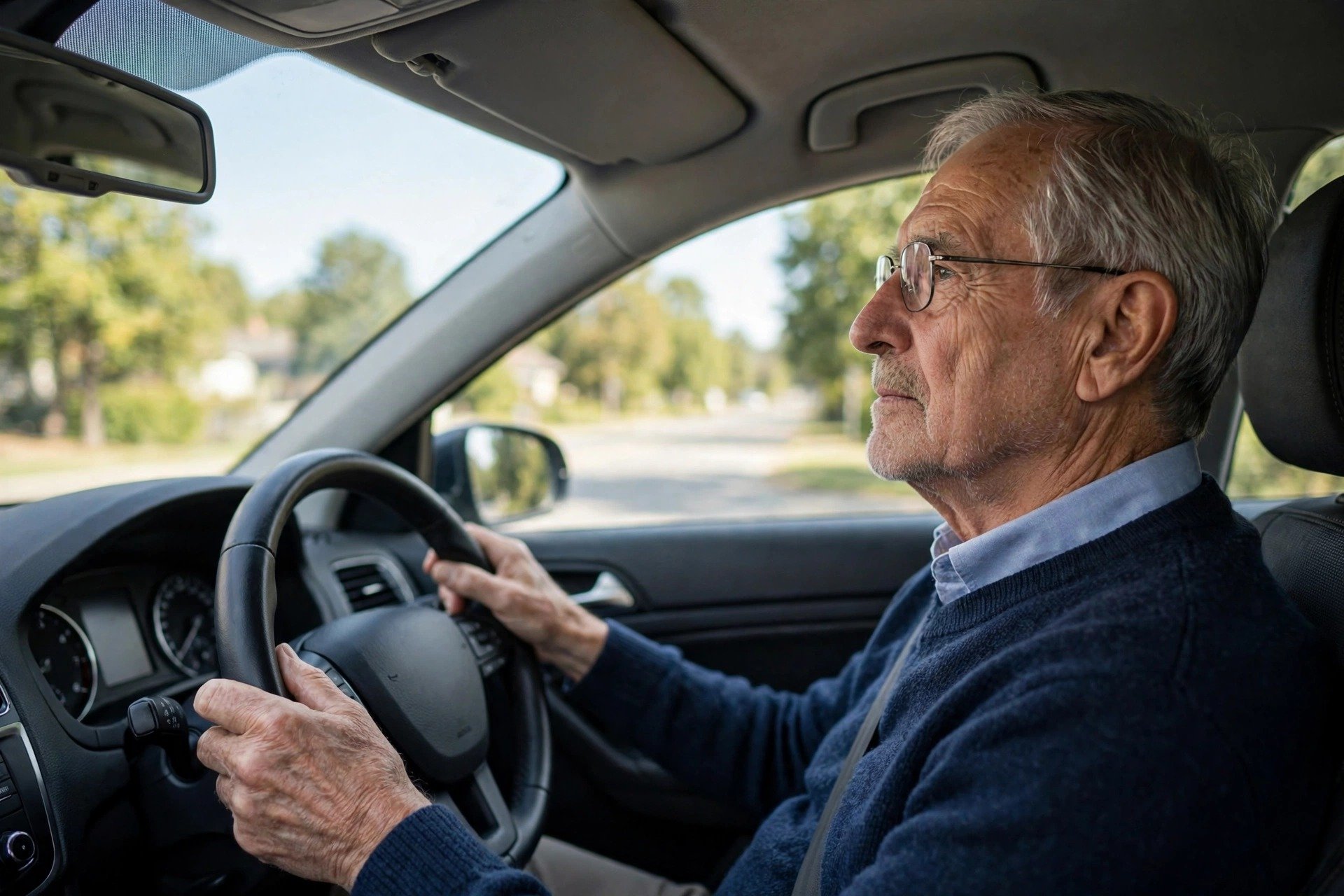
Wondering if your parent is still safe behind the wheel is a heavy burden. This guide provides clear warning signs to look for and a practical roadmap for having one of life's most difficult conversations, focusing on safety and preserving their dignity.
Let's distinguish between driving skill and driving fitness. Driving skill is the muscle memory and road sense built over decades. It's knowing how to merge onto a busy highway or navigate a tricky intersection. Driving fitness, however, is the physical and cognitive ability to perform the tasks of driving safely. It’s about clear vision, quick reflexes, and sharp decision making. The distinction matters because your parent’s skill might be intact, but their fitness to drive can decline without anyone noticing. A lifetime of clean driving records doesn't guarantee future safety when fitness begins to fade.
Warning Signs You Can't Ignore
You don't need to be a driving expert to spot the red flags. They often appear as small, isolated incidents before becoming a clear pattern. Pay attention to the physical evidence as much as their stories. Look for new, unexplained dents or scrapes on the car, the garage door, or the mailbox. A single incident can be an accident. A series of them is a warning.
Observe them behind the wheel if you can. Are they:
Getting confused by traffic signals or road signs?
Driving significantly slower than the speed limit?
Having trouble staying in their lane?
Braking or accelerating suddenly without reason?
Getting lost in familiar neighborhoods?
Listen to what they say, too. Comments about other drivers always being at fault, or near misses becoming more frequent, are significant. So are traffic tickets or warnings from law enforcement. These aren't just stories. They are data points. They are telling you something is wrong.
Medical Conditions That Directly Affect Driving
Age itself doesn't make someone a bad driver, but health conditions common in older adults can. Vision is the most obvious factor. Glaucoma can create blind spots, while cataracts can cause glare and blurred sight, especially at night. Macular degeneration can make it hard to see things directly in front of the vehicle.
Cognitive changes are just as critical. The early stages of dementia can impair judgment, problem solving, and spatial awareness. A person might forget the route to the grocery store they've visited for 30 years. They might not process a flashing yellow light correctly.
Physical ailments also play a major role. Arthritis in the neck can make it painful and difficult to turn and check a blind spot. Neuropathy in the feet, a common side effect of diabetes, can reduce the ability to feel the gas and brake pedals properly. Even medications, like common benzodiazepines for anxiety or certain sleep aids, can cause drowsiness and slow reaction times to a dangerous degree.
How to Start the Conversation
This is often the most dreaded step. The key is to approach it with empathy and concern, not accusation. Timing is everything. Don't bring it up in the middle of an argument or after a stressful event. Find a quiet, calm moment when you are both relaxed.
Use "I" statements instead of "you" statements. "You are a dangerous driver" will be met with instant defense. "I've been worried since I saw the new dent on the car" opens a door for discussion. Express your concern as a matter of love and safety for them, for grandchildren, and for others on the road.
This is about protecting their life and the lives of others, not about taking away their freedom. Frame it as an act of love, not an act of control.
Come prepared with observations, not judgments. Instead of saying, "You get lost all the time," try, "I was concerned when you mentioned you had trouble finding your way back from the doctor's office last week." Stick to the facts. Let the facts build the case for you.
Involving a Neutral Third Party
Sometimes, the message is better received when it doesn't come from you. A trusted, objective authority figure can validate your concerns and remove the personal conflict from the situation. The most powerful ally is often their primary care physician.
A doctor can discuss how specific health conditions or medications impact driving ability. They can perform a cognitive screening or a vision test. In many cases, a doctor's recommendation to limit or stop driving carries immense weight and is seen as a medical necessity rather than a family's opinion. You can even call the doctor's office ahead of an appointment to share your concerns, so the topic is already on their radar.
Other options include a certified driving rehabilitation specialist. These professionals can conduct a comprehensive, on-road evaluation to formally assess a person's driving fitness.
Exploring Transportation Alternatives
The loss of a driver's license often feels like a loss of independence. The best way to counter this is to have a plan ready for what comes next. Before you have the main conversation, research the options available in their community. This shows that you're not trying to isolate them, but rather trying to help them maintain their lifestyle safely.
Create a concrete list:
Rideshare Apps: Help them install and learn how to use Uber or Lyft on a smartphone. You can even link your credit card to their account.
Senior Transportation Services: Many towns and counties have dedicated shuttle or van services for seniors, often at a low cost, for trips to medical appointments and grocery stores.
Public Transit: If accessible, map out the key bus or train routes they might use.
Family and Friends: Create a shared calendar or a simple phone tree with siblings, neighbors, or friends who can help with errands.
Presenting these solutions shows that you've thought through the consequences and are committed to helping them stay active and engaged.
Managing the Aftermath
Even when a parent agrees to stop driving, expect a period of adjustment and grief. Driving is tied to identity, freedom, and self-reliance. Its loss can trigger feelings of depression and isolation. Be patient. Acknowledge their feelings of loss and frustration. It's a real loss, and it deserves to be mourned.
Continue to reinforce the transportation plan. Proactively schedule outings and offer rides. The goal is to demonstrate that their world hasn't shrunk. It has just changed. Their life can still be full, just without the car keys in their hand.
Your Next Step
Don't just hide the keys. That creates resentment and conflict. Your single most effective next step is to schedule an appointment with their primary care physician. Before the visit, call the nurse and briefly explain your specific concerns about their driving. This gives the doctor a heads up. Use that appointment to get a professional medical opinion and to begin this necessary conversation on neutral ground.